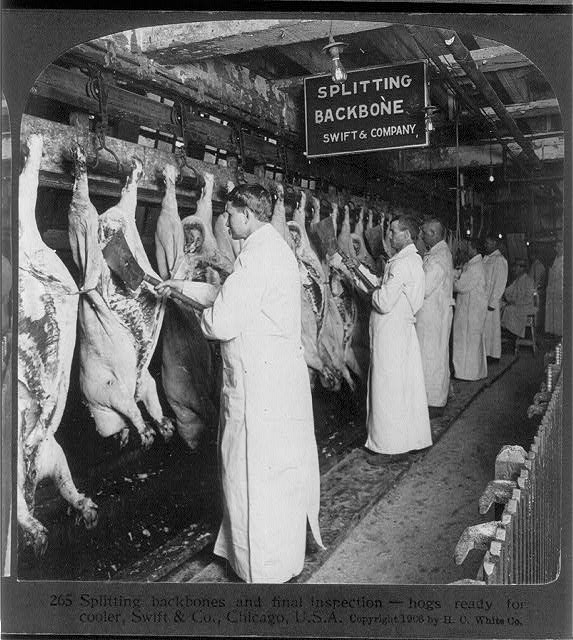
Throughout my research, I was able to learn, discover, and understand several ideas about the issue of food purity by examining primary source evidence in the newspaper archive. Upton Sinclair wrote "The Jungle", a book exposing the disturbing truth behind Chicago's meatpacking industry. Not only were the meatpacking plants filthy and polluted, but the meat contained feces, flesh of workers who were injured on the job, as well as rats. This gave the public a new insight on what was going into their food, which obviously, was disturbing. Instead of blaming the meatpacking industry for their unacceptable products and conditions, Theodore Roosevelt aimed his negative feedback towards Sinclair for taking his investigative research too far. This resulted in bad publicity towards the meatpacking industry which was not good for their business. According to the
Albuquerque Journal, the bill setting pure food standards was passed on June 28, 1906. Although Sinclair's book ended up on the banned book list for some time, he still became known as the Father of Consumer Protection. The idea of pure foods relates to Progressivism by the fact that there was a need for improvement. Even though the meatpacking industry got negative publicity, it forced change and led the public to be aware. If we're being honest, who wants to eat meat consisting of human and rat remains much less feces!? Sinclair's negative feedback from Roosevelt, while unfortunate for him, caused the change he was looking for. Progressivism is the search for change and improvement in a society, government, ect. Sinclair's exposure of meatpacking industries made the public aware of what they were buying and consuming leading to the investigation of other food industries, other than just meatpacking. By passing the bill for pure food, a positive change took place, which is definitely an example of Progressivism. This had a lasting effect on the country as shown by the dates of the newspapers ranging from 1906 all the way to 1968, not to mention purity of food is still relevant today.
- Horrors in Chicago: Inside the Packing House
- March 12, 1906
- Dallas Morning News
- Sinclair: Father of Consumer Protection
- November 29, 1968
- Trenton Evening Times
- No More Dog Meat
- Bill Ready For Passage: Complete Agreement Reported by Conferees
- June 28, 1906
- Albuquerque Journal
- Cartoon: Pure Food and the "Big Stick"--"Well Mounted"
- June 6, 1906
- Bellingham Herald



No comments:
Post a Comment